

Table of Contents
Galle’s dry season, roughly November through April, brings calm seas, clear skies, and the best conditions for exploring on foot. With the weather on your side, this is the ideal stretch to work through the top attractions in Galle without rain cutting a day short. Most of the fort’s key sights sit within easy walking distance of each other, which makes this compact old town one of the more relaxed places on the island to sightsee properly. Here are twelve worth building a trip around.
1. Galle Fort Ramparts
The Dutch-built ramparts circling the old town remain the single most popular of all the attractions in Galle, and for good reason. A full lap takes under an hour, with sea views the entire way and the best light arriving just before sunset. Once that is done the next best thing is to plan a meal inside the walls with our list of galle fort restaurants.
2. Galle Lighthouse
Sri Lanka’s oldest light station sits on the fort’s Utrecht Bastion. The first lighthouse was built in 1848, and the one you see today dates from 1939, after a fire destroyed the original in 1936.. It’s one of the quicker attractions in Galle to tick off, but a worthwhile one for photos against the rampart wall and the open ocean behind it.
3. Dutch Reformed Church
Built in 1755, this church holds some of the oldest gravestones in the fort, several set into the floor itself. The quiet interior and coral-stone walls make it one of the more atmospheric historical attractions in Galle worth a short detour.
4. All Saints’ Anglican Church
A short walk from the Dutch Reformed Church, this Gothic-style Anglican church adds a different architectural era to the fort’s religious sites, with stained glass windows that catch the afternoon light particularly well.
5. Galle National Museum
Housed in a former Dutch government building, this museum covers the region’s colonial history, traditional crafts, and archaeological finds. It’s a manageable size for a rainy-day backup or a slower morning between bigger stops, and the entry fee is modest enough to make it an easy add-on rather than a dedicated half-day trip.
6. Maritime Archaeology Museum
Set inside a restored Dutch warehouse, this museum focuses on shipwrecks and maritime trade along this stretch of coast, with recovered artefacts giving context to Galle’s centuries as a trading port. It’s smaller than the National Museum, which makes it easy to fit into a short break between walking stretches.
7. Old Dutch Hospital Precinct
Once a colonial-era hospital, this restored building now holds boutique shops, cafes, and a couple of well-regarded restaurants. It’s a comfortable stop for a slow lunch between the more history-heavy attractions in Galle.
8. Meeran Jumma Mosque
This striking white-and-turquoise mosque, blending Islamic and colonial architectural styles, sits in the middle of the fort’s daily life. Modest dress is expected, but visitors are generally welcome to view the exterior and courtyard.
9. Amangalla
Built in 1684 as the Dutch commanders’ headquarters and run as a hotel since 1865, this restored building remains one of the fort’s most photographed buildings, even for guests not staying the night, and it regularly features on lists of the most striking attractions in Galle for architecture alone. A drink at the bar or a look at the colonial-era furnishings is worth the short stop.
10. Flag Rock Bastion
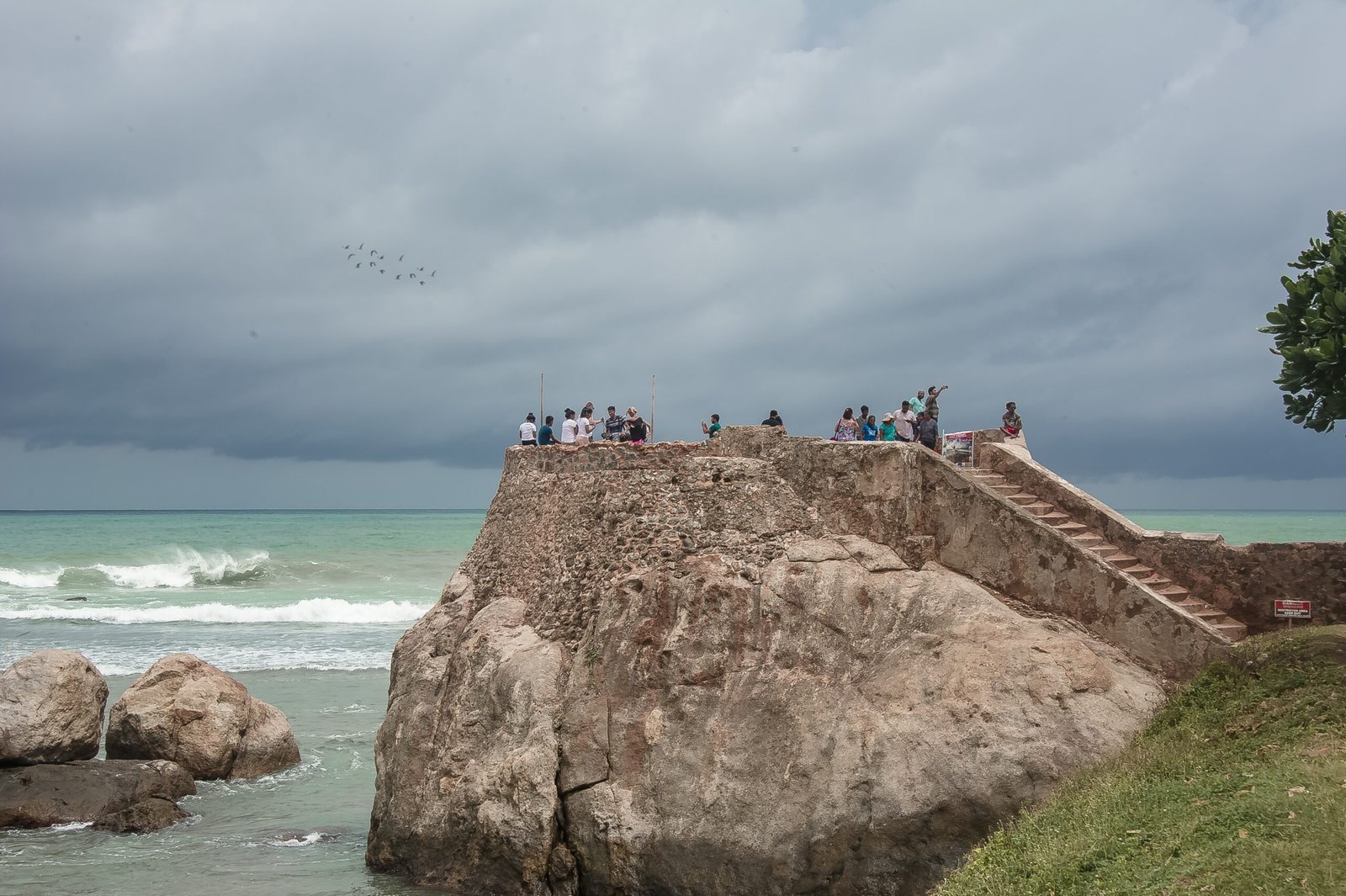
At the fort’s southern edge, Flag Rock offers one of the widest uninterrupted sea views in Galle, and it’s a popular spot to watch local divers leap from the rocks in the late afternoon. Timing a visit here for golden hour is one of the better ways to close out a day inside the fort walls.
11. Galle International Stadium
Set against the ramparts with the ocean behind it, Galle International Stadium is regularly named one of the most scenic cricket grounds in the world. Catching a match here, when the schedule lines up, is a memorable way to spend an afternoon, and even a quick look from outside the grounds is worth the short walk.
12. Jungle Beach
A short tuk-tuk ride past Unawatuna, Jungle Beach offers a quieter, more sheltered spot for snorkelling than the main fort beaches, and it pairs naturally with a half-day trip out of the old town, especially on a morning when the ramparts are already crowded.
Planning Your Dry-Season Days
Most of these attractions in Galle sit close enough together to cover on foot within the fort walls, with only the cricket stadium and Jungle Beach requiring a short ride. Mornings suit the museums and churches, while the ramparts and Flag Rock are best saved for the hour before sunset.
Getting Between Stops
Inside the fort walls, everything is walkable, and vehicles are limited on several of the narrower streets in any case. For Jungle Beach or the cricket stadium’s outer approach, a tuk-tuk is the easiest option and rarely costs much for such a short distance.
What to Bring
Sun protection matters more than most first-time visitors expect, given how much of the fort walking happens in open sun along the ramparts. Modest clothing is worth packing for the mosque and churches, and comfortable shoes make a real difference over a full day of stone streets.
Between stops, a proper meal makes the difference on a long sightseeing day, and a good shortlist of restaurants in galle sri lanka is worth having ready before you set out. If you end the day back on the coast, Skybreeze, a beachfront cafe and bar in Unawatuna, is a short tuk-tuk ride from the fort and serves dinner and cocktails by the sea.
Twelve stops is a full trip on its own, but the dry season’s steady weather means you can realistically fit most of these attractions in Galle into three or four unhurried days, with room left over for the beach towns just outside the old town walls.
Planning on a longer stay? See our full guide on things to do in Galle with beaches, food and day trips and make your stay a one to remember.
Frequently Asked Questions
Answers to the questions visitors ask most about attractions in Galle.
What is the most famous attraction in Galle?
Galle Fort is the most famous attraction in Galle. The walled old town is a UNESCO World Heritage Site, and its ramparts, lighthouse, churches, museums and colonial streets can all be explored on foot.
Is Galle Fort free to enter?
Yes. Walking into Galle Fort, around its streets and along the ramparts is free. Some sights inside the walls, such as the museums, charge a small entry fee.
How long does it take to walk around Galle Fort?
A full loop of the Galle Fort ramparts takes under an hour at an easy pace. To see the museums, churches, shops and cafes as well, allow at least half a day.
What is the best time of day to visit Galle Fort?
Visit museums and churches in the morning, when it is cooler and quieter. Come back to the ramparts and Flag Rock in the hour before sunset, when the light is softest and the views over the sea are at their best.
How old is the Galle Lighthouse?
Galle is Sri Lanka’s oldest light station. The first lighthouse was built in 1848, and the one standing today on the fort’s Utrecht Bastion dates from 1939, after a fire destroyed the original in 1936.
Where is Jungle Beach near Galle?
Jungle Beach is a small, sheltered cove on the Rumassala headland, a short tuk-tuk ride past Unawatuna. It is surrounded by forest and is popular for swimming and snorkelling when the sea is calm.